HomeTooth Pain at Night: Causes, Immediate Relief & Emergency Care | Bredau Dental
Tooth Pain at Night: Causes, Immediate Relief & Emergency Care | Bredau Dental
Understand why tooth pain throbs intensely when lying down, discover clinical at-home steps for temporary comfort, and know when you need immediate same-day emergency dental care in Chicago.

Why Does Tooth Pain Get Significantly Worse When Lying Down?
Few experiences are as disruptive as a sharp, throbbing toothache that flares up right as your head touches the pillow. What felt like a manageable twinge during the day often turns into agonizing, relentless pain at night. There are physiological reasons for this sudden escalation:
- Increased Cranial Blood Flow: When you transition from standing or sitting to lying flat, gravity no longer pulls blood down toward your body. Blood pressure inside your head rises, which sharply increases pressure within an inflamed tooth pulp.
- Decreased Salivary Production: Saliva contains natural antibacterial enzymes and minerals that buffer oral acids. During sleep, salivary glands slow down, allowing oral bacteria to become more active and irritate exposed dentin or compromised roots.
- Subconscious Clenching & Grinding: Many patients unconsciously clench their jaw or grind their teeth (bruxism) during the night, exerting hundreds of pounds of pressure onto an already compromised tooth.
- Fewer Daytime Distractions: During the day, conversations, work, and sensory input divert your brain’s attention. In a quiet, dark bedroom, pain receptors dominate your sensory processing.
Step-by-Step Nighttime Relief Protocol (Before Your Visit)
While home remedies cannot cure a bacterial infection, nerve damage, or cracked enamel, they can help you manage the pain until our Chicago clinic opens in the morning:
- Elevate Your Head with Pillows: Sleep propped up at a 45-degree angle. Elevating your head prevents blood from pooling in the jaw and immediately reduces intense vascular throbbing.
- Gentle Warm Salt Water Rinses: Dissolve 1/2 teaspoon of table salt in an 8-ounce glass of warm water. Swish gently for 30 seconds and spit. This cleanses food debris and draws fluid out of inflamed gum tissues.
- Cold Compress on the Cheek: Apply an ice pack wrapped in a clean towel to the outside of your cheek for 15 minutes, then remove for 15 minutes. This constricts local blood vessels and numbs deep pain pathways.
- Over-the-Counter Anti-Inflammatories: Non-steroidal anti-inflammatory drugs (NSAIDs) such as ibuprofen target pulpal inflammation. Always follow package directions and consult your physician if you take other medications.
- CRITICAL WARNING: Never place an aspirin or medication directly against your gums or tooth. Aspirin is acetylsalicylic acid and will cause a painful, severe chemical burn on your delicate mucosal tissue.
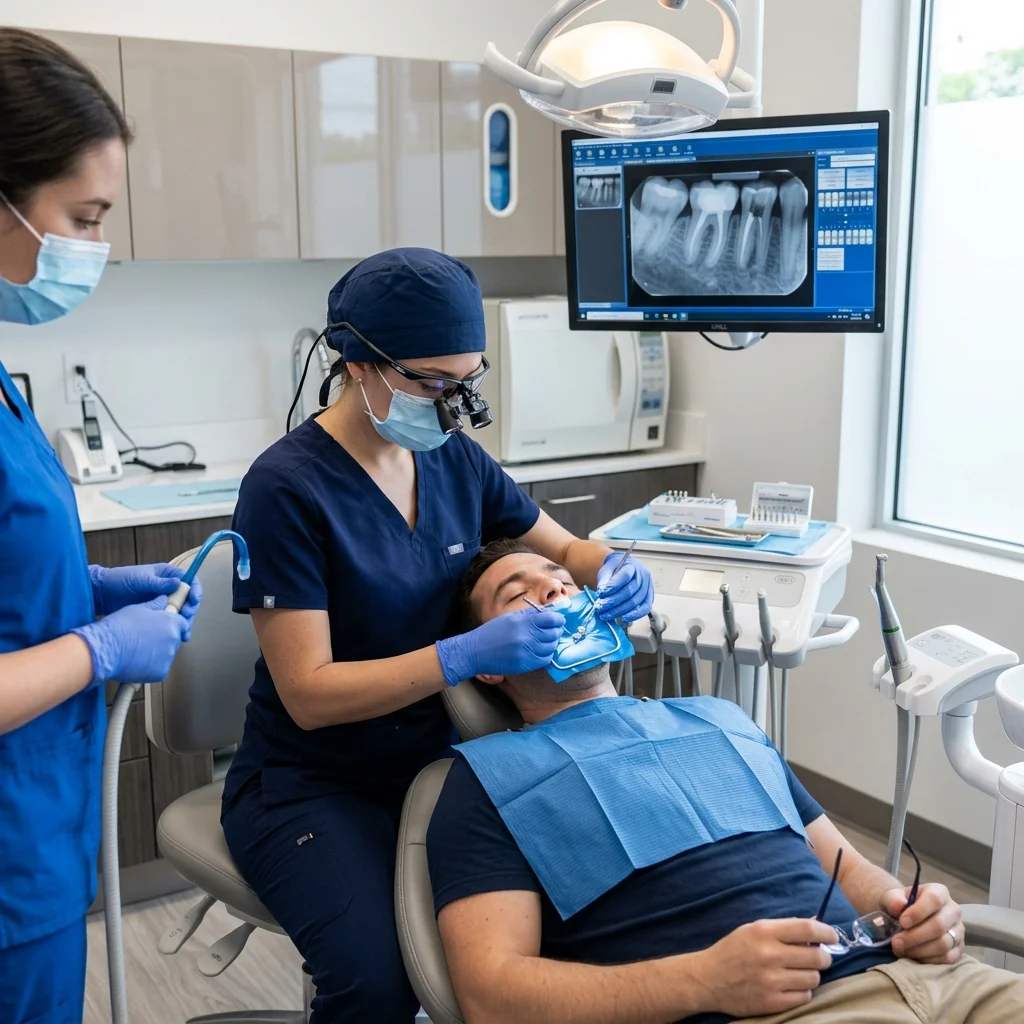
Red-Flag Symptoms: When Night Tooth Pain Requires Immediate Emergency Care
A minor toothache might wait a day or two, but certain signs indicate an acute dental emergency such as a dental abscess, advanced pulp necrosis, or systemic infection:
- Visible Facial or Jaw Swelling: If swelling extends to your cheek, jawline, or beneath your eye, the infection is spreading beyond the root tip.
- Fever or Chills: Systemic symptoms mean your body is fighting a spreading bacterial infection.
- Pus Discharge or a Pimple-Like Bump on Gums: A fistulous tract indicates an active abscess draining into your mouth.
- Difficulty Swallowing or Breathing: This is a life-threatening medical emergency requiring immediate hospitalization or urgent dental intervention.
- Trauma or Knocked-Out / Broken Tooth: Fractured teeth with exposed pulp require treatment within hours to prevent irreversible nerve death.
Suffering from Intense Tooth Pain? We Reserve Same-Day Emergency Slots.
Don’t wait for an infection to worsen. Bredau Dental in Chicago reserves dedicated daily appointment slots for emergency toothache relief, gentle root canals, and urgent restorations. Call us right away.